

What if the biggest mistake coworking operators are making has nothing to do with their buildings? The conversation around hospitality in coworking is becoming increasingly important as operators look for ways to differentiate their spaces, improve member experiences, and build sustainable businesses. But for Ade Carniel-Perrin, Chief Operating Officer of AfricaWorks, hospitality isn’t an added benefit. It’s the foundation of the business.
On the GCUC Podcast, Liz Elam catches up with Ade following their meeting at GCUC Africa in Cape Town to discuss how AfricaWorks is approaching flexible workspace growth across the continent. With operations in eight countries and plans to expand into four more, AfricaWorks is navigating a challenge familiar to growing operators everywhere: how do you build a recognizable brand while adapting to the needs of completely different communities? The answer starts with understanding that coworking is a service business.
One of the strongest moments in the conversation comes when Liz asks Ade whether coworking belongs in the hospitality industry or the real estate industry. For Ade, the answer is clear. Too many operators approach coworking primarily as a real estate business, focusing on the amount of space they can sell rather than the experience they’re delivering. But members aren’t simply purchasing desks. They’re choosing an environment where they’ll spend a significant part of their lives.
Ade believes that when someone walks into a coworking space, the team should know who they are, understand their preferences, and make the experience feel personal. Liz makes an important distinction: real estate is a decision made at a particular moment. Everything that happens afterward is hospitality. The building matters. The location matters. But what makes people want to return is often the way they’re treated once they’re inside. For operators looking to improve retention, hospitality in coworking deserves as much attention as design, pricing, and amenities.
AfricaWorks is doing more than opening traditional coworking locations. Its business model combines flexible offices, coworking, coliving, hospitality, food and beverage, and event spaces. The exact mix depends on each market’s needs. What works in Paris or New York doesn’t necessarily make sense in Lusaka or Dakar. Infrastructure, business demand, cultural expectations, and the surrounding environment all influence how people use space.
Ade explains that in some markets, having offices, restaurants, gyms, meeting rooms, and accommodation together can create a more valuable experience than offering those services separately. In Lusaka, Zambia, AfricaWorks identified demand for conferences and events. That opportunity can also support hospitality and food-and-beverage revenue, even when the conference customers aren’t existing coworking members. Instead of forcing every location into a predetermined format, AfricaWorks studies each market and adjusts its offering accordingly. Build for the community you’re serving, not just the business model you’re accustomed to operating.
Expansion creates an interesting challenge: how do you deliver consistent service across multiple countries when cultural expectations vary dramatically? Ade explains that maintaining a consistent physical environment is relatively straightforward. AfricaWorks can establish recognizable design standards and deliver a similar look and feel across locations. The harder part is service. A gesture that feels welcoming in one country may not be received the same way in another.
AfricaWorks addresses this by identifying the basic service expectations of its corporate clients while allowing local teams flexibility in how they deliver the experience. Liz relates this to GCUC’s international events, where local partners help ensure each conference reflects the community and market hosting it. Standardizing everything might make operations easier on paper, but it doesn’t necessarily create a better member experience. Great hospitality requires understanding the people in front of you.
When Liz asks Ade where he finds inspiration, he doesn’t point to another coworking brand. It’s restaurants. Before joining AfricaWorks, Ade worked in hospitality and food and beverage. That experience still shapes how he thinks about service, atmosphere, and customer expectations. Restaurants are especially interesting because each concept creates its own experience. The design, menu, service style, and personality work together to communicate what the brand represents.
That raises an interesting question for coworking operators: does your space have a recognizable personality beyond its furniture and branding? Members experience your business through countless small interactions: how they’re welcomed, how problems are handled, how the team communicates, and whether they feel recognized. These details are easy to overlook when the focus is on occupancy and revenue, but they’re also what make a space memorable.
Another important part of the discussion centers on mental health and wellness. Liz has been advocating for coworking operators to think more seriously about loneliness, connection, and the role workplaces can play in supporting mental well-being. Ade acknowledges that mental health can be a difficult subject to address in some of the markets AfricaWorks serves. Cultural attitudes and expectations vary, and approaches that work in one country may not translate directly to another.
During the conversation, Ade shares that AfricaWorks has begun trialing access to doctors in its West Africa operations during October, with plans to learn from member participation and feedback. It’s an early experiment, not a proven program. But the willingness to test something new is significant. The World Health Organization’s guidance on mental health at work reinforces the importance of workplace environments that support well-being. Research on workplace-based mental health interventions in Africa also provides context for local implementation challenges.
For coworking operators, the opportunity isn’t necessarily to become healthcare providers. It’s to consider how their spaces, partnerships, and communities might make support more accessible. Hospitality in coworking can extend beyond convenience and customer service. It can also mean paying attention to what people need to feel supported.
Ade’s enthusiasm for Africa goes well beyond the success of AfricaWorks. Throughout the conversation, he speaks about the continent’s people, resilience, economic potential, and growing role in the future of work. He sees opportunities emerging from demographic change, education, international business activity, and the increasing importance of African talent in global markets. AfricaWorks is already seeing companies use its spaces to support teams serving customers and businesses in Europe and North America.
But Ade also makes clear that Africa isn’t one uniform market. Africa Works has deliberately chosen where to expand and where not to compete. The company evaluates competition, regulations, market conditions, and its own ability to deliver the right product. Growth isn’t simply about opening as many locations as possible. It’s about knowing where your business can create value.
Toward the end of the episode, Liz asks Ade what he’s currently unlearning. His answer brings the entire conversation together. In an industry that’s changing rapidly, especially across diverse markets, he believes operators need to challenge their assumptions continually. What worked yesterday may not work tomorrow. What makes sense in one city may fail in another. And something that initially seems unlikely to succeed might deserve a chance.
Ade points to AfricaWorks’ mental health initiative as an example. His first reaction was skepticism. But after listening to the discussion at GCUC Africa, he reconsidered and decided to test the idea. That willingness to experiment may be one of the most valuable qualities an operator can develop. The future of coworking won’t be built by people who assume they already have every answer. It will be shaped by operators who listen to their communities, challenge their assumptions, and remain willing to evolve.
There are plenty of lessons to take from AfricaWorks’ approach to growth, but one stands above the rest. Successful coworking businesses understand that real estate is only the starting point. The experience comes from everything that happens afterward. From designing spaces around local demand to bringing hospitality into daily operations, Ade’s approach offers a reminder that the strongest businesses are built around the people they serve. And as the industry continues to grow globally, hospitality in coworking will remain an essential part of creating spaces where people want to work, connect, and belong.

How can coworking spaces create environments where different brains can thrive? On the GCUC Podcast, Amanda Perry joins Liz Elam to discuss neurodiversity, workplace design, belonging, and five practical ways operators can create more inclusive coworking experiences.
Read More
As companies demand more flexibility, traditional office real estate must rethink how it operates. Tuomas Sahi, CEO of Antiloop, shares how combining fixed leases with flexible workspace can create value for property owners while better serving the people who use their buildings. Discover why the future of office real estate is about more than owning space. It’s about understanding work.
Read More
Roger Bruce, CEO of Workspace Geek, joins Liz Elam to explore the future of coworking, from AI and actionable data to smarter operations and the continued importance of human connection.
Read More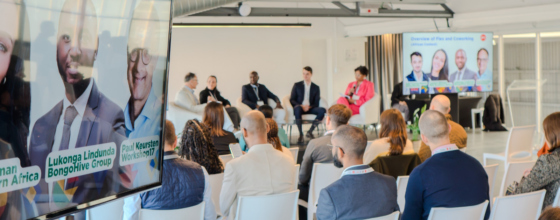
GCUC Africa brought the global coworking community to Cape Town for the first time, connecting operators, sharing ideas, and exploring Africa’s role in the future of work.
Read More
GCUC Access is turning a challenge to the coworking industry into action. Learn how Danielle Casey and 1909 are making mental health support part of founder support.
Read More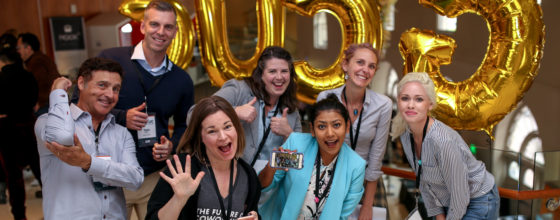
Coworking in Africa is evolving fast. Meet the operators, innovators, and leaders coming together at GCUC Africa to shape what’s next for flexible work.
Read More
The Coworking Institute is a new professional body built to give the coworking industry a permanent home for education, shared knowledge, professional development, and community. Created in partnership with GCUC and Jonathan O’Byrne, the Institute brings operator-led education, the Coworking MBA, AI programs, Foundations, the Coworking Wiki, and an international community together under one roof.
Read More
What does the future of coworking in Africa look like? Ikigai’s Nyambura Gichohi joins Liz Elam to discuss nature-based wellness, intentional growth, flexible workspace for NGOs, and the opportunities ahead for African coworking operators.
Read More
What happens when you rethink the meeting as an experience? Liz Elam talks with Elliott Sparsis of Together about hospitality, AI, physical connection, and the future of meetings.
Read More
Your coworking technology should make your business easier to run, not create another layer of complexity. Here’s what operators should consider when evaluating their tech stack.
Read More


